This is the report that I wrote in the context of the ASPERA-2 EU FP7 project. I am soooo proud of it!
Showing posts with label biology. Show all posts
Showing posts with label biology. Show all posts
Friday, 6 April 2012

Thursday, 30 September 2010
Wednesday, 19 May 2010
an easy guide to remember what a SNP is

A SNP is used to understand someone's Story - which population they belong to and who were his/her ancestors - and what makes them the Person they are - what do they carry in their DNA.
Thus, SNPs are used to find someone's S and P i.e. SNP.
----
Consider our DNA as a very very very long road, with millions of houses - which we call nucleotides - each of which has an address - we call this its "position" or "co-ordinate". Thus when we talk about a single nucleotide, we talk about 1 of the, 6 billion in the case of humans, houses that make up our road.

There are 4 types of nucleotides/houses (we call these alleles): blue (Cytosine or C), green (Adenine or A), yellow (Guanine or G), red (Thymine or T). If the houses in the photo above were a nucleotide sequence, this would have been GCTATG.
But a SNP is not just a single nucleotide, it is a single nucleotide polymorphism. What is meant by polymorphism is that the house in the middle of the photo above, say the house with address 17854853, in my road is of a different colour than the house of the same address in your road. In this case, mine is green whereas yours could be blue. In biology talk, this is equivalent to "there is a SNP at position 17854853, where I have allele A and you have allele C".
In order for a house to be called a SNP, it is required for at least 1% of the human population to have a different type of house (allele) at that address than the rest. As a result SNPs are not very common: on average only 1 in 1000 houses is different between two individuals.
"So far so good" you could say, "but why is your house green and mine blue?".
The answer is mutation. When DNA gets copied (mitosis) or when it is split in two sets of chromosomes to produce the cells that can give rise to a new organism (the gametes, i.e. the sperm and the egg), mistakes happen. What I mean by mistake is that sometimes the house changes colour, but it can also mean that a house is destroyed (i.e. deleted) or a new house can be inserted.
But this does not exactly explain your question: it only tells you why our houses in this specific address are different, but not why my house in this particular address is green and not red, and yours is blue and not yellow.
This is where the S and P come in. My house is green and yours is blue either because our ancestors were different (the S part) or because a mistake was made when either one of us got created (the P part).
----
We' ll consider at the S part first. Lets say that the tree below is a tiny part of the "tree of life". I am the green dot and you are the blue dot. You will be happy to know that we closely related since we had a common ancestor just near the green line.

(image modified from http://dragonartz.files.wordpress.com/2008/12/_vector-tree-preview2-by-dragonart.png?w=495&h=495)
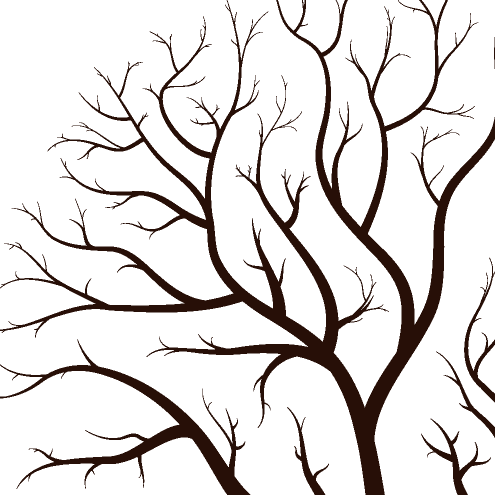
Our common ancestor had a green house at address 17854853 of his/her road. This ancestor had two kids, one of which is my ancestor and the other is your ancestor. A mistake was made when your ancestor was created and his house turned from green to blue. And just so that you do not get offended, mistakes are not necessarily bad. They can be good (advantageous mutation), bad (disadvantageous mutations) or they can make no difference whatsoever (neutral mutations). We now know that most often mistakes make no difference.
So the reason why my house is green and yours is blue is explained by who were our ancestors! Differences are explained by our history but this also means that looking at these differences we can understand our history. Find out what is our story. And this is one of the two reasons why SNPs are important: they allow us to understand where we come from and why we are the way we are!!!
Let me give you an example. I choose lactase persistence since it is a very clear and very famous example and because one of the people I worked with during my PhD worked on this.
Lactase is the enzyme that digests the lactose in milk. In some humans lactase activity decreases after weaning (we call these lactose intolerant). In others, lactase activity persists at a high level throughout adult life (we call these lactorse tolerant). Biologists wanted to find out how did this difference arise, what makes these individuals different. For this reason they had to find the SNPs associated with lactase persistence.
Two SNPs have been identified as the best able to explain why one individual is able to digest lactose and another one isn't. The first is "rs4988235 (−13910C→T)".
Don't be scared! All this means is that:
- the name of the SNP/house is rs4988235,
- the SNP/house is found 13910 houses before the start of the LCT gene, the gene makes the lactase enzyme (for the record the house's actual address is 136325115),
- the house can be either of type blue (C) or red (T), and
- the ancestral house was of type blue (C) so when one has that type of house is lactose intolerant, whereas if their house is red (T) they are lactose tolerant.
The other SNP is "rs182549 (−22018G→A)". You can now guess what this SNP is from my explanation above.
What Bersaglieri et al (2004) did was to look at those two SNP addresses in a number of individuals and count how many of them had one type of house or the other. In other words they wanted to determine the frequencies of the persistence-associated alleles (T in SNP rs4988235 and A in SNP rs182549). The individuals they used came from three populations (European Americans, African Americans, and East Asians) and for each of these individuals they knew if they were lactose tolerant or intolerant. What they found was a correlation between how common were the persistence-associated alleles and the level of lactose persistence in a population. European Americans, the population with the most lactose tolerant individuals, had the greatest percentage of persistence-associated alleles in these SNPs(77%). In contrast, the other two populations show low lactose tolerance and they have the lowest frequencies of persistence-associated alleles in these SNPs (13-14% in African Americans and 0% in East Asians).
So what did we understand about human history from looking at these SNPs? Based on this data, Bersaglieri et al (2004) estimated that these mistakes (C to T in SNP rs4988235 and G to A for SNP rs182549) rapidly became more common at a time near the estimated origin of dairy farming in northern Europe i.e. ∼9,000 years ago. They thus concluded that added nutrition from dairy appears to have provided an advantage in northern Europe. When dairy farming appeared, humans could not drink the milk. Mistakes happened in the DNA of some of these people and since being able to digest lactose gave an advantage, these mistakes spread through the population (i.e. the frequency of the persistence-associated alleles increased). In fact, these mistakes are in the top 3 of the most advantageous mistakes estimated to date.
------
Now lets talk about the P.
Our DNA does not only tell us about our past, but also about our present and our future. In other words, it tells us what we are and what does this mean in terms of our future. We get this information, in other words we understand what makes us the Person we are, when we compare our DNA to that of others. And one of the main reasons we want to do these comparisons is for our health. To predict what will happen to out state of health in the future. I will use cancer as an example.
Almost a decade after the sequencing of the human genome, new technologies have been developed that - given this sequence - make the creation of individual "SNP maps" or "SNP profiles" easier and easier. They also - and maybe more important - make it a lot cheaper.
But what are SNP maps? (I will use SNP maps from now on but SNP maps and SNP profiles are the same thing).
As I mentioned before, most of our DNA does not differ from person to person. Thus, in order to understand what causes our phenotypic differences - e.g. why do I get breast cancer and you are not - we do not need to compare the whole of our genomes. We only need to look at those addresses where there are known differences in the types of house found there. In other words we just need to look at the parts of our DNA which are polymorphic. Our SNPs that is.
A SNP map is like a registry that says what type of house (allele) we have in those addresses (houses) which are known to differ between individuals. It looks a bit like this: individual X at SNP rs4278313 (whose address is 105123) has allele C, at SNP rs9708285 (whose address is 105195) has allele T, at SNP rs9751025 (whose address is 105213) has allele A, etc etc.
But this is not the only source of information that doctors have for each cancer patient: they also know about their phenotype i.e. what cancer they have, for how long, what treatment worked for them and what did not, their sex, their age, their lifestyle choices, etc. etc.
You may now ask me "since doctors have all this other information, why are SNP maps helpful?".
The reason why SNP maps are important is that they can lead to faster and personalised medicine since they can be used
(a) for the better understanding of the cancer (red part of the following figure) but also
(b) for diagnosis and personalised treatment (blue part of the following figure) .
I would say that currently we are mainly using them for the former, but i will explain both of these below.

(taken from http://nci.nih.gov/images/Documents/f6e06278-e717-4465-b5b4-fda72f95584b/cancer41.jpg)
(a) understanding the biology of cancer: when scientists compare SNP maps of individuals with the same cancer, they can find in which SNPs these patients have the same allele and therefore which are the candidates for the cancer-causing mistakes (mutations). In other words, if individual A and individual B both have prostate cancer and they also have allele T at SNP rs4430796, allele G at SNP rs7501939 and allele C rs3760511 C, when men without prostate cancer have C, A and A respectively, then scientists assume that these SNPs are likely to be associated with this cancer. Of course these comparisons happen with a large number of individuals from many populations.
Similarly, SNP profiles can be compared to better understand the response to cancer treatments. If individual A and individual B both have prostate cancer, both got a lot better when prescribed a specific drug and both have the same alleles at a number of their SNPs, then scientists assume that these SNPs a likely to be associated not only with this cancer but also with this treatment.
(b) diagnosis and treatment planning: the stage above is aiming at personalised medicine. In the previous scenario it means that once the SNPs most associated with this cancer have been identified, a test is created to test each man for this set of SNPs. If they are found to have the cancer-causing alleles in these addresses then they have to check their prostate a lot more often than others who do not. In this way the cancer can be diagnosed in the earliest stage, increasing the chances of those people of living a long life. By the way, the first such test exists. A company called Proactive Genomics created two years ago the
What stage (a) is aiming at is the following scenario: patient enters the room, doctor compares the patient's SNP map to the SNP maps of cancer patients. From this comparison the doctor is able to identify immediately, not only the specific nature of the cancer of the patient but also the best treatment for this particular patient. Cancer is diagnosed and treated at a very early stage and patient has less chances of dying because of the cancer.
However, we should not forget the ethics of this "mapping" and also to take into account the patient's psychology. Patients react differently to news about their health. They make a number of decisions some of which could prolong their lives, but others may have the opposite effect. The question you need to ask yourself is: Would you like to know that there is a probability that you will get cancer? Would you have liked to know this at the age of 18? Or 15? or 5? Would you like other people to know about this? Will it be possible for you to restrict who knows and who doesn't? How is this knowledge going to affect your life?
-----
So from now on, when you see or hear something about SNPs remember your S and your P: remember that the importance of SNPs is that they can tell us things about our hiStory and they can lead to Personalised medicine.
Friday, 12 March 2010
Rap + Genetics
so it seems that I will post in this blog whatever I find which i think it is interesting.
Thursday, 11 March 2010
Bioinformatics, Systems Biology, Synthetic Biology: new paradigms or changes in fashion?
This is an article I wrote for a major Greek newspaper "ΒΗΜΑ" which was published on the 5th of February 2010. There is going to be a small Greek twist to this blog as well. A loose translation in English follows the article in Greek.
Βιοπληροφορική, Συστημική Βιολογία, Συνθετική Βιολογία
Καινούργιες ιδέες ή απλά «αλλαγή συρμού»;
Μέσα σε μία μόνο δεκαετία «δημιουργήθηκαν» τρεις «νέοι» τομείς της Βιολογίας. Το 2000 όλοι πίστευαν ότι η Βιοπληροφορική (Βioinformatics) είναι το μέλλον της Βιολογίας. Μετά την τελική αποκωδικοποίηση του ανθρώπινου γονιδιώματος, τρία χρόνια αργότερα, όλοι μιλούσαν για Συστημική Βιολογία (Systems Βiology). Σήμερα, στο τέλος της δεκαετίας που διανύουμε, στο επίκεντρο του ενδιαφέροντος είναι πλέον η Συνθετική Βιολογία (Synthetic Βiology).
Είναι απόλυτα λογικό λοιπόν να αναρωτηθούμε αν οι συγκεκριμένοι τομείς είναι όντως καινούργιοι, αν πρόκειται δηλαδή για τη δημιουργία ενός νέου «υποδείγματος» (paradigm). Αλλάζει όντως η επιστήμη της Βιολογίας με πρωτόγνωρα ραγδαίους ρυθμούς ή οι επιστήμονες δίνουν στην έρευνά τους το πιο νέο, και άρα ελκυστικό, όνομα για να έχουν ίσως περισσότερες ευκαιρίες να βρουν χρηματοδότηση;
Η οποιαδήποτε απάντηση σε αυτό το ερώτημα δεν μπορεί να δοθεί πριν από τον ορισμό αυτών των τομέων.Βιοπληροφορικήείναι η ανάπτυξη εργαλείων πληροφορικής για την ανάλυση, συλλογή και διαχείριση των βιολογικών δεδομένων.Συστημική Βιολογία είναι η μελέτη των σχέσεων των στοιχείων ενός βιολογικού συστήματος με σκοπό την κατανόηση του συστήματος· ενσωματώνει εργαλεία και μεθοδολογίες από επιστήμες όπως τα μαθηματικά, η φυσική, η χημεία και η πληροφορική. Τέλος, ηΣυνθετική Βιολογίαείναι η σύνθεση πολύπλοκων συστημάτων, βασισμένων και εμπνευσμένων από τα βιολογικά συστήματα.
Με απλά λόγια, η Συστημική Βιολογία ερευνά την οργάνωση και λειτουργία των βιολογικών συστημάτων όπως τα γνωρίζουμε, ενώ η Συνθετική Βιολογία προσπαθεί να κατασκευάσει αυτά και άλλα βιολογικά συστήματα στο εργαστήριο. Γι΄ αυτόν τον λόγο η Συνθετική Βιολογία θεωρείται από μερικούς το τελευταίο βήμα στην επεξήγηση της βιολογικής πολυπλοκότητας, ότι δηλαδήμόνοόταν καταφέρουμε να φτιάξουμε ζωή από το μηδέν στο εργαστήριο θα έχουμε αντιληφθεί πραγματικά πώς λειτουργούν τα κύτταρα.
Για την καλύτερη προσπέλαση των τομέων αυτών, θα αναφερθώ σύντομα στη συνεισφορά του καθενός στην κατανόηση των πρωτεϊνικών αλληλεπιδράσεων, ένα θέμα το οποίο απασχολεί δικαιολογημένα εδώ και έναν αιώνα τους βιολόγους, μιας και, όπως έχει πια αποδειχθεί, η πολυπλοκότητα που βλέπουμε γύρω μας οφείλεται στην πολυπλοκότητα των πρωτεϊνών.
Στο τέλος του 20ού αιώνα, ένα μέρος από τις πρωτεϊνικές αλληλεπιδράσεις είχαν επιβεβαιωθεί πειραματικά στα εργαστήρια, αλλά τα αποτελέσματα αυτά ήταν διεσπαρμένα
σε εκατοντάδες άρθρα. Μεγάλη ήταν λοιπόν η συνεισφορά του πρώτου από τους τρεις τομείς στους οποίους αναφερόμαστε, του τομέα της Βιοπληροφορικής. Το 2000 δημιουργήθηκε η πρώτη βάση δεδομένων των πειραματικά επιβεβαιωμένων πρωτεϊνικών αλληλεπιδράσεων, η DΙΡ (1).
Οι βάσεις δεδομένων, όπως η DΙΡ, αποδείχθηκαν να είναι ουσιαστικά η «τροφή» που χρειαζόταν για να δημιουργηθεί ο τομέας της Συστημικής Βιολογίας. Οι βιολόγοι, ακολουθώντας την ως τότε κυρίαρχη- αλλά όχι και μοναδική- προσέγγιση, την αναλυτική (analytical) ή αναγωγική (reductionist) προσέγγιση, ερευνούσαν καθεμιά από τις πρωτεϊνικές αλληλεπιδράσεις ξεχωριστά ή σε μικρές ομάδες (βιολογικές οδούς). Αντιθέτως, όταν οι μαθηματικοί, οι φυσικοί και οι πληροφορικοί κοίταξαν τις βάσεις δεδομένων που μόλις είχαν δημιουργηθεί, είδαν τις αλληλεπιδράσεις ως κομμάτια ενός παζλ, ενός συστήματος.
Με άλλα λόγια, η Βιοπληροφορική δεν τακτοποίησε απλά τα- μεγάλων διαστάσεων πια- βιολογικά δεδομένα, αλλά δημιούργησε χάρτες (η DΙΡ είναι χάρτης των δικτύων αλληλεπιδράσεων (interactome), ενώ άλλες βάσεις δεδομένων είναι οι χάρτες του γονιδιώματος (genome), του πρωτεϊνιδιώματος (proteome), του μεταγραφήματος (transcriptome) κτλ.). Αρα, η μεγάλη συνεισφορά της Βιοπληροφορικής ήταν ότι έδειξε μια διαφορετική- σκόπιμα δεν λέω καινούργια- προσέγγιση των βιολογικών δεδομένων που υπήρχαν ως τότε.
Από εκεί και πέρα, θα μπορούσαμε να πούμε ότι η Συστημική Βιολογία «καταβρόχθισε» τη Βιοπληροφορική και πήρε τη θέση της στο επίκεντρο του ενδιαφέροντος. Φυσικοί, μαθηματικοί και πληροφορικοί παρατήρησαν ότι θα μπορούσαν να χρησιμοποιήσουν τις τεχνικές που είχαν αναπτύξει για τα δικά τους δεδομένα, για να αναλύσουν τα βιολογικά συστήματα. Το επιχείρημά τους ήταν ότι μέσα από έναν επαναληπτικό κύκλο μοντελοποίησης, προσομοίωσης και θεωρίας θα βοηθούσαν στην κατανόηση των βιολογικών συστημάτων και στη στόχευση των πειραμάτων, διατυπώνοντας νέες υποθέσεις οι οποίες θα μπορούσαν να διερευνηθούν ως προς την εγκυρότητά τους στα εργαστήρια από τους βιολόγους.
Προτού προλάβουν όμως να αλλάξουν τα ονόματα των πανεπιστημιακών τμημάτων και των μεταπτυχιακών πτυχίων, από Βιοπληροφορική σε Συστημική Βιολογία, άρχισαν οι συζητήσεις για τη Συνθετική Βιολογία. Αρχισαν μάλιστα προτού ακόμη προλάβει να δημοσιευτεί η έκθεση του ΕRΑSysΒio που αναφερόταν στην πορεία της ευρωπαϊκής έρευνας στον τομέα της Συστημικής Βιολογίας· στην έκθεση αυτή η Ελλάδα ήταν απούσα.
Οπως οι μαθηματικοί, οι φυσικοί και οι πληροφορικοί πρότειναν τρόπους να βοηθήσουν στην κατανόηση της πολυπλοκότητας των οργανισμών, πρότειναν και οι μηχανικοί τον δικό τους τρόπο, τη μεθοδολογία που χρησιμοποιείται για την κατασκευή αυτοκινήτων, μηχανημάτων και αεροπλάνων. Το επιχείρημά τους ήταν αλλάζοντας ελαφρά και με λογικό τρόπο τα γνωστά ως τότε συστήματα, οι αλλαγές στη συμπεριφορά των συστημάτων που θα δημιουργούνταν θα ήταν μεγάλη πηγή γνώσης.
Στην περίπτωση των πρωτεϊνικών αλληλεπιδράσεων, οι συνθετικοί βιολόγοι έχοντας διαλέξει ένα μικρό μέρος του συνολικού δικτύου αλληλεπίδρασης των πρωτεϊνών (που αντιστοιχεί συνήθως σε μια βιολογική οδό) αφαιρούν, μία μία ή σε συνδυασμούς, τις πρωτεΐνες. Παρομοίως, άλλοι επιστήμονες αφαιρούν όσες περισσότερες πρωτεΐνες μπορούν από το συνολικό δίκτυο έτσι ώστε να βρουν τον ελάχιστο βιώσιμο συνδυασμό πρωτεϊνών. Και τα δύο αυτά παραδείγματα μπορεί να τα βρει κανείς στην έκθεση του ΝΕSΤ Ρathfinder Ιnitiative (3), στο οποίο παρουσιάζονται 18 προγράμματα Συνθετικής Βιολογίας, όπως η κατασκευή βιολογικών καυσίμων, η νανοτεχνολογία και οι ασθένειες (σημειώνω ότι μόνον σε έναν από αυτούς τους τομείς υπήρχε ελληνική συμμετοχή και αυτή είναι ειδικευμένη στη χάραξη πολιτικής).
Δεν υπάρχει αμφιβολία ότι όλες αυτές οι μεθοδολογίες και τα εργαλεία που χρησιμοποιούνται όλο και περισσότερο έχουν βοηθήσει σε σημαντικό βαθμό την κατανόηση της βιολογικής πολυπλοκότητας. Το ερώτημα που θέτω εδώ- όπως το έθεσαν και πολλοί από τους συγγραφείς στο ειδικό τεύχος του ΕΜΒΟ reports (4) τον Αύγουστο που μας πέρασε- είναι το κατά πόσον αυτοί οι τομείς είναι νέες ιδέες ή απλά αλλαγές «συρμού», αποτελέσματα μιας αναζήτησης για τον επόμενο «ελκυστικό» όρο. Το ερώτημα αυτό δεν είναι καθόλου τυχαίο από τη στιγμή που δεν είναι η πρώτη φορά που η διεπιστημονικότητα οδηγεί σε άλματα στη Βιολογία: στη δεκαετία του 1950 η συνεισφορά των φυσικών και μαθηματικών επίσπευσε την ανάδυση της Μοριακής Βιολογίας (Μolecular Βiology), ενός - τότε- νέου τομέα της Βιολογίας.
Κατά τη γνώμη μου- και πολλών άλλωνσε εννοιολογικό επίπεδο οι τομείς αυτοί δεν είναι όσο καινούργιοι όσο φαίνονται, αλλά αποτελούν τη συνέχεια παλιών προσεγγίσεων. Η διαμάχη ανάμεσα στην αναλυτική (analytical) ή αναγωγική (reductionist) προσέγγιση και στην ολιστική (holistic) ή συστημική (systemic) προσέγγιση υπήρχε πάντα στην επιστήμη της Βιολογίας. Η πρώτη προσέγγιση υποστηρίζει ότι τα πάντα μπορούν να εξηγηθούν μελετώντας τα μέρη ενός συστήματος ξεχωριστά· αυτή ήταν η κύρια προσέγγιση που χρησιμοποιούσαν οι μοριακοί βιολόγοι μέχρι πρόσφατα. Η δεύτερη προσέγγιση- ανάμεσα στους υποστηρικτές της οποίας ήταν ο φιλόσοφος Καντ και ο ποιητής/φυσιοδίφης Γιόχαν Β. Γκαίτε- υποστηρίζει ότι οι βιολογικές λειτουργίες πρέπει να μελετούνται συνολικά, αφού ένα σύστημα είναι κάτι παραπάνω από το σύνολο των στοιχείων που το αποτελούν- πρόκειται με άλλα λόγια για τη λεγόμενη «ανάδυση ιδιοτήτων» (emergence).
Για την ώρα τουλάχιστον, η Συστημική και η Συνθετική βιολογία αποτελούν συνέχεια αυτής της δεύτερης προσέγγισης, δεν έχουν δηλαδή αποδείξει ακόμη ότι αποτελούν νέα υποδείγματα(paradigms), όπως αποδείχθηκε τελικά ότι ήταν η Μοριακή Βιολογία. Επειδή οι επιστήμες τους τελευταίους δύο αιώνες παρέμειναν «απομονωμένες» και άρα οι μεθοδολογίες της καθεμιάς δεν είναι αναγκαστικά ικανές για να χρησιμοποιηθούν σε άλλες επιστήμες, η επικοινωνία μεταξύ φυσικών, μαθηματικών, πληροφορικών, μηχανικών, και βιολόγων, αν και έχει ήδη οδηγήσει σε επιτυχίες, παραμένει ιδιαίτερα δύσκολη. Σε αυτό ίσως βοηθούσε η παραγωγή διεπιστημονικών επιστημόνων, πράγμα που τονίζεται στην έκθεση του ΕRΑSysΒio (2), στην οποία συστήνεται ότι μια νέα προσέγγιση στην εκπαίδευση επιστημόνων είναι απαραίτητη σε όλα τα επίπεδα.
Ας ελπίσουμε ότι η καινούργια πολιτική της Ερευνας και Τεχνολογίας της χώρας μας θα ενημερωθεί για αυτές τις εκθέσεις και θα βοηθήσει να μπει και η Ελλάδα στα ευρωπαϊκά δίκτυα της Συστημικής και Συνθετικής Βιολογίας.
In just one decade in the science of biology three "new" areas were "created". In 2000 everyone thought that Bioinformatics is the future of biology. After the final sequence of the human genome, three years later, everyone was talking about Systems biology.Today, at the end of this decade, the focus is Synthetic Biology. It is therefore perfectly reasonable to wonder if these areas are indeed new, if a new paradigm is being created. Is the science of biology changing with with unprecedented high rates or do scientists give to their research the newest, and therefore most attractive name in order to increase their opportunities of getting funding?
Any answer to this question cannot be given before the definition of these fields.Bioinformatics is the use of tools for the analysis, collection and management of biological data. Systems Biology is the study of relations between elements of a biological system to understand the system, integrating tools and methodologies from disciplines such as mathematics, physics, chemistry and computing. Finally, Synthetic Biology is the synthesis of complex systems which are based and inspired by biological systems.
Put simply, systems biology investigates the organization and functioning of biological systems as we know them, while Synthetic biology seeks to construct these and other biological systems in the laboratory. That is why the Synthetic biology is considered by some as the last step in the explanation of biological complexity, in other words only when we will be able to create life from scratch in the laboratory we really understand how the cells work.
To explain a bit better these sectors I will refer briefly to the contribution of each to the understanding of protein interactions, an issue that rightly concerns biologists, for over a century, because, as it is now established, the complexity we see around us is due to the complexity at the protein level.
At the end of the 20th century, a large number of protein interactions were confirmed experimentally in the laboratories, but the results were scattered in hundreds of articles. So the contribution of the first of the three areas we are talking about here, the field of Bioinformatics, was great. In 2000 the first database of experimentally verified protein interactions was created, DIP (1).
The databases, such as DIP, proved to be essentially the "fuel" needed to create the field of systems biology. Biologists, following the by then dominant, but not alone, analytical or reductionist approach, investigated each protein interaction separately or in small groups (biological pathways). However, when the mathematicians, physicists and computer scientists looked at the databases, they saw the interactions as pieces of a puzzle, a system.
In other words, Bioinformatics not only organised the large-scale biological data, but created maps (DIP is the map of protein interactions (interactome), while other databases are maps of the genome , the proteome, the transcriptome, etc.). So the great contribution of Bioinformatics was that it revealed a different - I deliberately do not call it new - approach.
Beyond that, we could say that systems biology "devouring" Bioinformatics and took its place in the limelight. Physicists, mathematicians and computer scientists have observed that they could use the techniques they had developed for their own data to analyze biological systems. Their argument was that through an iterative cycle of modeling, simulation and theory they will help in our understanding of biological systems and targeting experiments, making new hypotheses that could be explored as to their validity in the laboratories by biologists.
Before there was time to change the names of University Departments and graduate degrees from Bioinformatics to Systems Biology, discussions began on Synthetic Biology. They started even before the publication of the ERASysBio report, in which the course of European research in systems biology was outlined; in this report Greece was absent.
As mathematicians, physicists and computer scientists suggested ways to help in our understanding of the complexity of systems, engineers proposed to use their methods too, in other words the methodology they use in the manufacture of cars, machinery and aviation industries. Their argument was that changing slightly and in a reasonable manner the known systems, the observed changes in the behavior of systems would be a great source of knowledge.
In the case of protein interactions, synthetic biologists remove a small part of the network of protein interactions (which is usually a biological pathway) one by one or combinations of proteins. Similarly, other scientists remove as many proteins as they can from the total network to find the minimum sustainable mix of proteins. Both these examples can be found in the report of the NEST Initiative Rathfinder (3), which presented 18 programs in synthetic biology, such as the construction of bio-fuels, nanotechnology and disease (note that only one of these areas was Greek participation and is specialized in policy).
There is no doubt that all these methodologies and tools that are increasingly being used, have already been significant help to the understanding of biological complexity. The question I ask here - as raised by many authors in the special issue of EMBO reports (4) in August of last year -is whether these areas are a new paradigm or just fashion-shifts. This question is not without relevance, since it is not the first time that interdisciplinarity leads to breakthroughs in biology: in the 1950s the contribution of mathematics and speeded up the emergence of Molecular Biology, a then-new field of biology.
In my opinion-and many others- at the conceptual level, these areas are not as brand new as they seem. The dispute between the analytical or reductionist approach and the holistic or systemic approach is very old in the science of Biology. The first approach argues that everything can be explained by studying the components of a system separately; this was the main approach used by molecular biologists until recently. The second approach - whose supporters include the philosopher Kant and the poet / naturalist Johann V. Goethe - argues that biological functions should be studied as a whole, since a system is more than the sum of its constituent elements - in other words there are also "emergent properties".
For now at least, systems and synthetic biology belong to this second approach, and have not yet proven that they are new paradigms, as it was demonstrated eventually that Molecular Biology was. As the sciences over the last two centuries remained "isolated", the methodologies of each are not necessarily able to be used in other sciences, so communication between the physicists, mathematians, computer scientists, engineers and biologists, even though it has already resulted in successes, it remains very difficult. This can be avoided if interdisciplinary scientists are produced, as was highlighted in ERASysBio (2), in which it was recommended that a new approach to training scientists is needed at all levels.
Hopefully the people responsible for the research and technology policies in our country will be informed of these reports, will help Greek scientists to become part of the European networks of System and Synthetic Biology.
Βιοπληροφορική, Συστημική Βιολογία, Συνθετική Βιολογία
Καινούργιες ιδέες ή απλά «αλλαγή συρμού»;
Μέσα σε μία μόνο δεκαετία «δημιουργήθηκαν» τρεις «νέοι» τομείς της Βιολογίας. Το 2000 όλοι πίστευαν ότι η Βιοπληροφορική (Βioinformatics) είναι το μέλλον της Βιολογίας. Μετά την τελική αποκωδικοποίηση του ανθρώπινου γονιδιώματος, τρία χρόνια αργότερα, όλοι μιλούσαν για Συστημική Βιολογία (Systems Βiology). Σήμερα, στο τέλος της δεκαετίας που διανύουμε, στο επίκεντρο του ενδιαφέροντος είναι πλέον η Συνθετική Βιολογία (Synthetic Βiology).
Είναι απόλυτα λογικό λοιπόν να αναρωτηθούμε αν οι συγκεκριμένοι τομείς είναι όντως καινούργιοι, αν πρόκειται δηλαδή για τη δημιουργία ενός νέου «υποδείγματος» (paradigm). Αλλάζει όντως η επιστήμη της Βιολογίας με πρωτόγνωρα ραγδαίους ρυθμούς ή οι επιστήμονες δίνουν στην έρευνά τους το πιο νέο, και άρα ελκυστικό, όνομα για να έχουν ίσως περισσότερες ευκαιρίες να βρουν χρηματοδότηση;
Η οποιαδήποτε απάντηση σε αυτό το ερώτημα δεν μπορεί να δοθεί πριν από τον ορισμό αυτών των τομέων.Βιοπληροφορικήείναι η ανάπτυξη εργαλείων πληροφορικής για την ανάλυση, συλλογή και διαχείριση των βιολογικών δεδομένων.Συστημική Βιολογία είναι η μελέτη των σχέσεων των στοιχείων ενός βιολογικού συστήματος με σκοπό την κατανόηση του συστήματος· ενσωματώνει εργαλεία και μεθοδολογίες από επιστήμες όπως τα μαθηματικά, η φυσική, η χημεία και η πληροφορική. Τέλος, ηΣυνθετική Βιολογίαείναι η σύνθεση πολύπλοκων συστημάτων, βασισμένων και εμπνευσμένων από τα βιολογικά συστήματα.
Με απλά λόγια, η Συστημική Βιολογία ερευνά την οργάνωση και λειτουργία των βιολογικών συστημάτων όπως τα γνωρίζουμε, ενώ η Συνθετική Βιολογία προσπαθεί να κατασκευάσει αυτά και άλλα βιολογικά συστήματα στο εργαστήριο. Γι΄ αυτόν τον λόγο η Συνθετική Βιολογία θεωρείται από μερικούς το τελευταίο βήμα στην επεξήγηση της βιολογικής πολυπλοκότητας, ότι δηλαδήμόνοόταν καταφέρουμε να φτιάξουμε ζωή από το μηδέν στο εργαστήριο θα έχουμε αντιληφθεί πραγματικά πώς λειτουργούν τα κύτταρα.
Για την καλύτερη προσπέλαση των τομέων αυτών, θα αναφερθώ σύντομα στη συνεισφορά του καθενός στην κατανόηση των πρωτεϊνικών αλληλεπιδράσεων, ένα θέμα το οποίο απασχολεί δικαιολογημένα εδώ και έναν αιώνα τους βιολόγους, μιας και, όπως έχει πια αποδειχθεί, η πολυπλοκότητα που βλέπουμε γύρω μας οφείλεται στην πολυπλοκότητα των πρωτεϊνών.
Στο τέλος του 20ού αιώνα, ένα μέρος από τις πρωτεϊνικές αλληλεπιδράσεις είχαν επιβεβαιωθεί πειραματικά στα εργαστήρια, αλλά τα αποτελέσματα αυτά ήταν διεσπαρμένα
σε εκατοντάδες άρθρα. Μεγάλη ήταν λοιπόν η συνεισφορά του πρώτου από τους τρεις τομείς στους οποίους αναφερόμαστε, του τομέα της Βιοπληροφορικής. Το 2000 δημιουργήθηκε η πρώτη βάση δεδομένων των πειραματικά επιβεβαιωμένων πρωτεϊνικών αλληλεπιδράσεων, η DΙΡ (1).
Οι βάσεις δεδομένων, όπως η DΙΡ, αποδείχθηκαν να είναι ουσιαστικά η «τροφή» που χρειαζόταν για να δημιουργηθεί ο τομέας της Συστημικής Βιολογίας. Οι βιολόγοι, ακολουθώντας την ως τότε κυρίαρχη- αλλά όχι και μοναδική- προσέγγιση, την αναλυτική (analytical) ή αναγωγική (reductionist) προσέγγιση, ερευνούσαν καθεμιά από τις πρωτεϊνικές αλληλεπιδράσεις ξεχωριστά ή σε μικρές ομάδες (βιολογικές οδούς). Αντιθέτως, όταν οι μαθηματικοί, οι φυσικοί και οι πληροφορικοί κοίταξαν τις βάσεις δεδομένων που μόλις είχαν δημιουργηθεί, είδαν τις αλληλεπιδράσεις ως κομμάτια ενός παζλ, ενός συστήματος.
Με άλλα λόγια, η Βιοπληροφορική δεν τακτοποίησε απλά τα- μεγάλων διαστάσεων πια- βιολογικά δεδομένα, αλλά δημιούργησε χάρτες (η DΙΡ είναι χάρτης των δικτύων αλληλεπιδράσεων (interactome), ενώ άλλες βάσεις δεδομένων είναι οι χάρτες του γονιδιώματος (genome), του πρωτεϊνιδιώματος (proteome), του μεταγραφήματος (transcriptome) κτλ.). Αρα, η μεγάλη συνεισφορά της Βιοπληροφορικής ήταν ότι έδειξε μια διαφορετική- σκόπιμα δεν λέω καινούργια- προσέγγιση των βιολογικών δεδομένων που υπήρχαν ως τότε.
Από εκεί και πέρα, θα μπορούσαμε να πούμε ότι η Συστημική Βιολογία «καταβρόχθισε» τη Βιοπληροφορική και πήρε τη θέση της στο επίκεντρο του ενδιαφέροντος. Φυσικοί, μαθηματικοί και πληροφορικοί παρατήρησαν ότι θα μπορούσαν να χρησιμοποιήσουν τις τεχνικές που είχαν αναπτύξει για τα δικά τους δεδομένα, για να αναλύσουν τα βιολογικά συστήματα. Το επιχείρημά τους ήταν ότι μέσα από έναν επαναληπτικό κύκλο μοντελοποίησης, προσομοίωσης και θεωρίας θα βοηθούσαν στην κατανόηση των βιολογικών συστημάτων και στη στόχευση των πειραμάτων, διατυπώνοντας νέες υποθέσεις οι οποίες θα μπορούσαν να διερευνηθούν ως προς την εγκυρότητά τους στα εργαστήρια από τους βιολόγους.
Προτού προλάβουν όμως να αλλάξουν τα ονόματα των πανεπιστημιακών τμημάτων και των μεταπτυχιακών πτυχίων, από Βιοπληροφορική σε Συστημική Βιολογία, άρχισαν οι συζητήσεις για τη Συνθετική Βιολογία. Αρχισαν μάλιστα προτού ακόμη προλάβει να δημοσιευτεί η έκθεση του ΕRΑSysΒio που αναφερόταν στην πορεία της ευρωπαϊκής έρευνας στον τομέα της Συστημικής Βιολογίας· στην έκθεση αυτή η Ελλάδα ήταν απούσα.
Οπως οι μαθηματικοί, οι φυσικοί και οι πληροφορικοί πρότειναν τρόπους να βοηθήσουν στην κατανόηση της πολυπλοκότητας των οργανισμών, πρότειναν και οι μηχανικοί τον δικό τους τρόπο, τη μεθοδολογία που χρησιμοποιείται για την κατασκευή αυτοκινήτων, μηχανημάτων και αεροπλάνων. Το επιχείρημά τους ήταν αλλάζοντας ελαφρά και με λογικό τρόπο τα γνωστά ως τότε συστήματα, οι αλλαγές στη συμπεριφορά των συστημάτων που θα δημιουργούνταν θα ήταν μεγάλη πηγή γνώσης.
Στην περίπτωση των πρωτεϊνικών αλληλεπιδράσεων, οι συνθετικοί βιολόγοι έχοντας διαλέξει ένα μικρό μέρος του συνολικού δικτύου αλληλεπίδρασης των πρωτεϊνών (που αντιστοιχεί συνήθως σε μια βιολογική οδό) αφαιρούν, μία μία ή σε συνδυασμούς, τις πρωτεΐνες. Παρομοίως, άλλοι επιστήμονες αφαιρούν όσες περισσότερες πρωτεΐνες μπορούν από το συνολικό δίκτυο έτσι ώστε να βρουν τον ελάχιστο βιώσιμο συνδυασμό πρωτεϊνών. Και τα δύο αυτά παραδείγματα μπορεί να τα βρει κανείς στην έκθεση του ΝΕSΤ Ρathfinder Ιnitiative (3), στο οποίο παρουσιάζονται 18 προγράμματα Συνθετικής Βιολογίας, όπως η κατασκευή βιολογικών καυσίμων, η νανοτεχνολογία και οι ασθένειες (σημειώνω ότι μόνον σε έναν από αυτούς τους τομείς υπήρχε ελληνική συμμετοχή και αυτή είναι ειδικευμένη στη χάραξη πολιτικής).
Δεν υπάρχει αμφιβολία ότι όλες αυτές οι μεθοδολογίες και τα εργαλεία που χρησιμοποιούνται όλο και περισσότερο έχουν βοηθήσει σε σημαντικό βαθμό την κατανόηση της βιολογικής πολυπλοκότητας. Το ερώτημα που θέτω εδώ- όπως το έθεσαν και πολλοί από τους συγγραφείς στο ειδικό τεύχος του ΕΜΒΟ reports (4) τον Αύγουστο που μας πέρασε- είναι το κατά πόσον αυτοί οι τομείς είναι νέες ιδέες ή απλά αλλαγές «συρμού», αποτελέσματα μιας αναζήτησης για τον επόμενο «ελκυστικό» όρο. Το ερώτημα αυτό δεν είναι καθόλου τυχαίο από τη στιγμή που δεν είναι η πρώτη φορά που η διεπιστημονικότητα οδηγεί σε άλματα στη Βιολογία: στη δεκαετία του 1950 η συνεισφορά των φυσικών και μαθηματικών επίσπευσε την ανάδυση της Μοριακής Βιολογίας (Μolecular Βiology), ενός - τότε- νέου τομέα της Βιολογίας.
Κατά τη γνώμη μου- και πολλών άλλωνσε εννοιολογικό επίπεδο οι τομείς αυτοί δεν είναι όσο καινούργιοι όσο φαίνονται, αλλά αποτελούν τη συνέχεια παλιών προσεγγίσεων. Η διαμάχη ανάμεσα στην αναλυτική (analytical) ή αναγωγική (reductionist) προσέγγιση και στην ολιστική (holistic) ή συστημική (systemic) προσέγγιση υπήρχε πάντα στην επιστήμη της Βιολογίας. Η πρώτη προσέγγιση υποστηρίζει ότι τα πάντα μπορούν να εξηγηθούν μελετώντας τα μέρη ενός συστήματος ξεχωριστά· αυτή ήταν η κύρια προσέγγιση που χρησιμοποιούσαν οι μοριακοί βιολόγοι μέχρι πρόσφατα. Η δεύτερη προσέγγιση- ανάμεσα στους υποστηρικτές της οποίας ήταν ο φιλόσοφος Καντ και ο ποιητής/φυσιοδίφης Γιόχαν Β. Γκαίτε- υποστηρίζει ότι οι βιολογικές λειτουργίες πρέπει να μελετούνται συνολικά, αφού ένα σύστημα είναι κάτι παραπάνω από το σύνολο των στοιχείων που το αποτελούν- πρόκειται με άλλα λόγια για τη λεγόμενη «ανάδυση ιδιοτήτων» (emergence).
Για την ώρα τουλάχιστον, η Συστημική και η Συνθετική βιολογία αποτελούν συνέχεια αυτής της δεύτερης προσέγγισης, δεν έχουν δηλαδή αποδείξει ακόμη ότι αποτελούν νέα υποδείγματα(paradigms), όπως αποδείχθηκε τελικά ότι ήταν η Μοριακή Βιολογία. Επειδή οι επιστήμες τους τελευταίους δύο αιώνες παρέμειναν «απομονωμένες» και άρα οι μεθοδολογίες της καθεμιάς δεν είναι αναγκαστικά ικανές για να χρησιμοποιηθούν σε άλλες επιστήμες, η επικοινωνία μεταξύ φυσικών, μαθηματικών, πληροφορικών, μηχανικών, και βιολόγων, αν και έχει ήδη οδηγήσει σε επιτυχίες, παραμένει ιδιαίτερα δύσκολη. Σε αυτό ίσως βοηθούσε η παραγωγή διεπιστημονικών επιστημόνων, πράγμα που τονίζεται στην έκθεση του ΕRΑSysΒio (2), στην οποία συστήνεται ότι μια νέα προσέγγιση στην εκπαίδευση επιστημόνων είναι απαραίτητη σε όλα τα επίπεδα.
Ας ελπίσουμε ότι η καινούργια πολιτική της Ερευνας και Τεχνολογίας της χώρας μας θα ενημερωθεί για αυτές τις εκθέσεις και θα βοηθήσει να μπει και η Ελλάδα στα ευρωπαϊκά δίκτυα της Συστημικής και Συνθετικής Βιολογίας.
--------------
In just one decade in the science of biology three "new" areas were "created". In 2000 everyone thought that Bioinformatics is the future of biology. After the final sequence of the human genome, three years later, everyone was talking about Systems biology.Today, at the end of this decade, the focus is Synthetic Biology. It is therefore perfectly reasonable to wonder if these areas are indeed new, if a new paradigm is being created. Is the science of biology changing with with unprecedented high rates or do scientists give to their research the newest, and therefore most attractive name in order to increase their opportunities of getting funding?
Any answer to this question cannot be given before the definition of these fields.Bioinformatics is the use of tools for the analysis, collection and management of biological data. Systems Biology is the study of relations between elements of a biological system to understand the system, integrating tools and methodologies from disciplines such as mathematics, physics, chemistry and computing. Finally, Synthetic Biology is the synthesis of complex systems which are based and inspired by biological systems.
Put simply, systems biology investigates the organization and functioning of biological systems as we know them, while Synthetic biology seeks to construct these and other biological systems in the laboratory. That is why the Synthetic biology is considered by some as the last step in the explanation of biological complexity, in other words only when we will be able to create life from scratch in the laboratory we really understand how the cells work.
To explain a bit better these sectors I will refer briefly to the contribution of each to the understanding of protein interactions, an issue that rightly concerns biologists, for over a century, because, as it is now established, the complexity we see around us is due to the complexity at the protein level.
At the end of the 20th century, a large number of protein interactions were confirmed experimentally in the laboratories, but the results were scattered in hundreds of articles. So the contribution of the first of the three areas we are talking about here, the field of Bioinformatics, was great. In 2000 the first database of experimentally verified protein interactions was created, DIP (1).
The databases, such as DIP, proved to be essentially the "fuel" needed to create the field of systems biology. Biologists, following the by then dominant, but not alone, analytical or reductionist approach, investigated each protein interaction separately or in small groups (biological pathways). However, when the mathematicians, physicists and computer scientists looked at the databases, they saw the interactions as pieces of a puzzle, a system.
In other words, Bioinformatics not only organised the large-scale biological data, but created maps (DIP is the map of protein interactions (interactome), while other databases are maps of the genome , the proteome, the transcriptome, etc.). So the great contribution of Bioinformatics was that it revealed a different - I deliberately do not call it new - approach.
Beyond that, we could say that systems biology "devouring" Bioinformatics and took its place in the limelight. Physicists, mathematicians and computer scientists have observed that they could use the techniques they had developed for their own data to analyze biological systems. Their argument was that through an iterative cycle of modeling, simulation and theory they will help in our understanding of biological systems and targeting experiments, making new hypotheses that could be explored as to their validity in the laboratories by biologists.
Before there was time to change the names of University Departments and graduate degrees from Bioinformatics to Systems Biology, discussions began on Synthetic Biology. They started even before the publication of the ERASysBio report, in which the course of European research in systems biology was outlined; in this report Greece was absent.
As mathematicians, physicists and computer scientists suggested ways to help in our understanding of the complexity of systems, engineers proposed to use their methods too, in other words the methodology they use in the manufacture of cars, machinery and aviation industries. Their argument was that changing slightly and in a reasonable manner the known systems, the observed changes in the behavior of systems would be a great source of knowledge.
In the case of protein interactions, synthetic biologists remove a small part of the network of protein interactions (which is usually a biological pathway) one by one or combinations of proteins. Similarly, other scientists remove as many proteins as they can from the total network to find the minimum sustainable mix of proteins. Both these examples can be found in the report of the NEST Initiative Rathfinder (3), which presented 18 programs in synthetic biology, such as the construction of bio-fuels, nanotechnology and disease (note that only one of these areas was Greek participation and is specialized in policy).
There is no doubt that all these methodologies and tools that are increasingly being used, have already been significant help to the understanding of biological complexity. The question I ask here - as raised by many authors in the special issue of EMBO reports (4) in August of last year -is whether these areas are a new paradigm or just fashion-shifts. This question is not without relevance, since it is not the first time that interdisciplinarity leads to breakthroughs in biology: in the 1950s the contribution of mathematics and speeded up the emergence of Molecular Biology, a then-new field of biology.
In my opinion-and many others- at the conceptual level, these areas are not as brand new as they seem. The dispute between the analytical or reductionist approach and the holistic or systemic approach is very old in the science of Biology. The first approach argues that everything can be explained by studying the components of a system separately; this was the main approach used by molecular biologists until recently. The second approach - whose supporters include the philosopher Kant and the poet / naturalist Johann V. Goethe - argues that biological functions should be studied as a whole, since a system is more than the sum of its constituent elements - in other words there are also "emergent properties".
For now at least, systems and synthetic biology belong to this second approach, and have not yet proven that they are new paradigms, as it was demonstrated eventually that Molecular Biology was. As the sciences over the last two centuries remained "isolated", the methodologies of each are not necessarily able to be used in other sciences, so communication between the physicists, mathematians, computer scientists, engineers and biologists, even though it has already resulted in successes, it remains very difficult. This can be avoided if interdisciplinary scientists are produced, as was highlighted in ERASysBio (2), in which it was recommended that a new approach to training scientists is needed at all levels.
Hopefully the people responsible for the research and technology policies in our country will be informed of these reports, will help Greek scientists to become part of the European networks of System and Synthetic Biology.
Subscribe to:
Posts (Atom)